
Lot: 1
Untitled
Opening Bid
£2,100
Estimate: £2,100 – £2,500
Provenance:
Private U.K. CollectionAcquired by the above from the estate of Mabel H. Aves
Inaugural Collection
Register to bid“A unique artistic voice that would resonate in India’s artistic sphere for generations to come.”
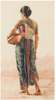
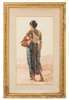
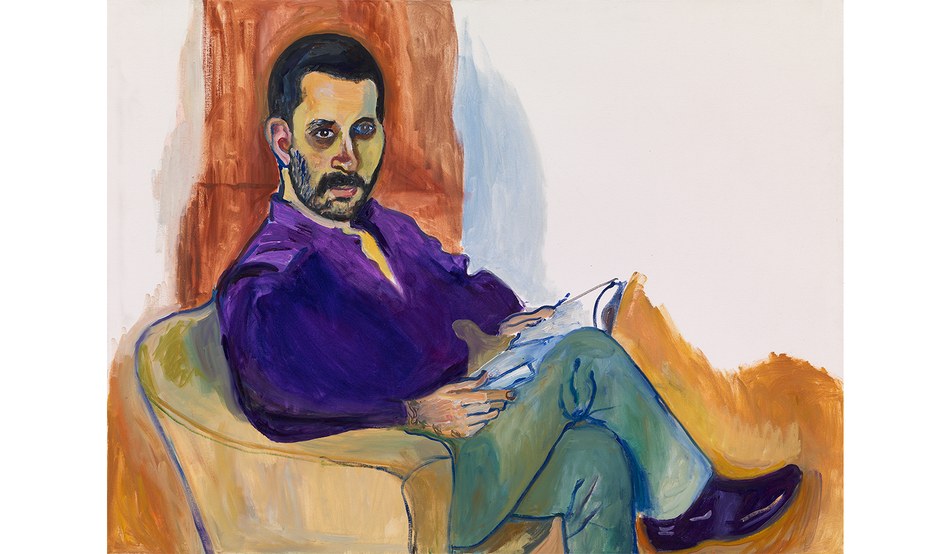
This painting, created by the renowned sculptor Ganpatrao Mhatre during his time at the prestigious J.J. School of Art in 1893, offers a unique glimpse into the formative years of a visionary artist who would go on to leave an indelible mark on Indian sculpture. Mhatre, who was deeply influenced by Western classical art forms while staying grounded in his Indian heritage, produced this piece as part of his academic training at the school.At the time of its creation, Mhatre was navigating the intersection of two powerful artistic traditions. The late 19th century was a period marked by the rise of colonial influence in India, which brought with it Western artistic conventions that often overshadowed indigenous styles. However, as one of the most gifted and promising students at the J.J. School, Mhatre managed to infuse these techniques with an intrinsic Indian sensibility that set his work apart. His father recognised that Mhatre was unusually artistically adept and enrolled him into the school. The school did not have a sculpture course so Mhatre joined the drawing and painting course.This painting reveals Mhatre's attention to both fine detail and a dynamic use of form, elements that would later become the hallmark of his sculptural oeuvre. The delicate handling of light and shadow suggests a meticulous study of the human figure, influenced by both European realism and the classical forms of the Greek and Roman traditions. Mhatre’s fascination with anatomy, which would become central to his future sculptures, is evident in the careful depiction of human form in this early work.In 1893, Mhatre was just beginning to carve out his artistic identity, still under the tutelage of European-trained masters at the J.J. School of Art. Little did the academic world know that this student, whose work was grounded in academic rigor, would later become a revolutionary in Indian sculpture. Mhatre’s sculptures would merge Western realism with Indian subjects, a marriage that would spark discussions on colonialism, nationalism, and cultural identity within the Indian art community.Though many of Mhatre’s sculptures—like his statues of Mahadev Govind Ranade and Queen Victoria—remain well-known, works from his early years, like this painting, offer us a glimpse into his developmental period, revealing his initial grappling with the blending of Western techniques and Indian subjects. This work stands as a testament to the formative years that helped shape one of India’s finest sculptors, offering both historical and artistic significance for the study of Mhatre’s broader legacy.The nascent Anglo-Indian art establishment hailed young Mhatre as India's first important fine art sculptor. A review published in The Times of India lavished praise on his debut sculptural work, To the Temple (Mandirpath Gamini), as "the best piece of sculpture that has ever been done in India". Raja Ravi Varma proclaimed Mhatre's To the Temple "the most beautiful production of the kind I have ever seen by a native". Rabindranath Tagore commended the sculpture for its excellence in marrying Western classical form and Indian subject.This painting, then, stands as a pivotal moment in the journey of an artist who was laying the foundation for a unique artistic voice that would resonate in India’s artistic sphere for generations to come. It is not merely a work of art; it is a snapshot of a young Ganpatrao Mhatre at a crucial juncture in his development, when he was poised to leave behind his mark on the world, not just through paintings, but through the grand sculptures that would later adorn public spaces and memorials across India.
Available in this sale
Related Lots
Lot Number: 3
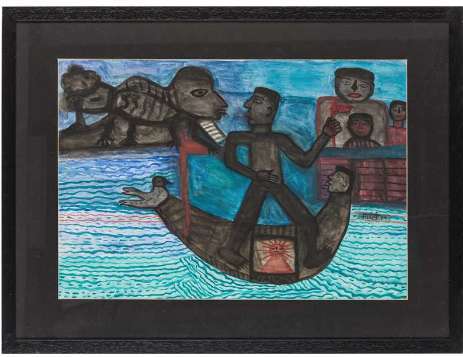
Madhvi Parekh
19th Century
Born in 1942 in Sanjaya, Gujarat, Madhvi Parekh is a self-taught artist renowned for her unique blend of traditional Indian folk art and contemporary techniques. Her work often draws from childhood memories, rural life, and local legends, creating a dreamlike quality that invites viewers into her imaginative world. Since 1972, Parekh has held numerous solo and group exhibitions worldwide, establishing herself as a significant figure in modern Indian art.
Estimate
£3,000 – £5,000
Lot Number: 5
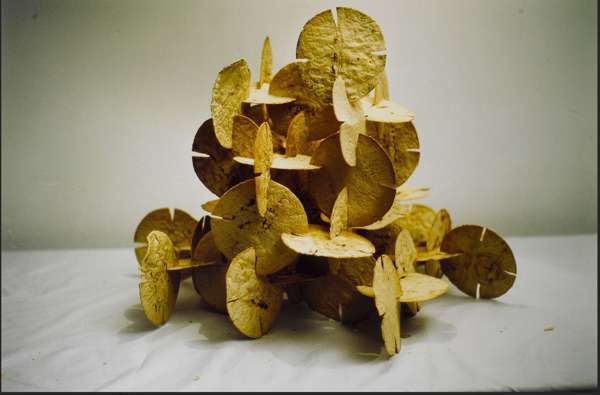
Damián Ortega
Taxidermy
Executed in 1998, this work is number 1 from an edition of 6 plus 2 artist's proofs
Estimate
£7,000 – £8,000